
Enhancing Ethical Capacity in Healthcare: A Workshop on Ethical Decision-Making
Amid the rapid advancement of medical technology and artificial intelligence, healthcare professionals are increasingly confronted with complex decisions, not only about what is clinically effective, but also about what is morally right. In this evolving landscape, the ability to make sound ethical decisions has become more essential than ever.
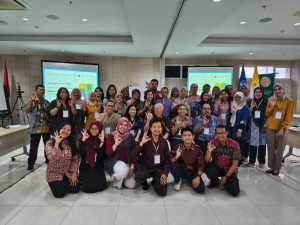
As part of its commitment to fostering ethical competence in healthcare, the Center for Bioethics and Medical Humanities (CBMH), Universitas Gadjah Mada, organized a two-day workshop titled “Ethics in Decision Making for Healthcare Professionals” on October 2–3, 2025. The event took place at the 8th Floor Auditorium of the Tahir Building, Faculty of Medicine, Public Health, and Nursing UGM.
The workshop featured four distinguished speakers: Prof. D.L. (Dick) Willems, MD, PhD from Amsterdam UMC; Prof. Syafaatun Almirzanah, Ph.D; Dr. CB Kusmaryanto, SCJ; and drg. Agnes Bhakti Pratiwi, MPH, Ph.D. Participants included healthcare practitioners, academics, and students from across Indonesia, all demonstrating strong enthusiasm in exploring ethical dilemmas commonly encountered in medical practice.
Across eight sessions, participants were guided to identify, analyze, and resolve ethical challenges in professional settings. In the session titled “Identifying Ethical Situations in Healthcare Services,” Prof. Dick Willems presented the case study “Kitty,” illustrating how conflicts of values can create profound dilemmas for healthcare providers. He introduced two major moral theories—Deontology (duty-based ethics) and Consequentialism (outcome-based ethics)—and connected them to contemporary issues such as big data, genetic engineering, and emerging medical technologies.
Meanwhile, drg. Agnes Bhakti Pratiwi introduced the framework of Virtue Ethics, emphasizing the importance of character and practical wisdom in ethical decision-making. She highlighted that being a good healthcare professional requires not only clinical expertise but also honesty, empathy, responsibility, and moral courage.
Prof. Syafaatun Almirzanah further underscored the importance of cultural competence in serving patients from diverse backgrounds. According to her, healthcare professionals must understand not only the patient’s illness but also the person behind it. “AI and medical technology cannot replace empathy,” she affirmed.
In addition, Prof. Willems introduced the “Ethical Toolkit for Decision Making” developed by the Dutch Medical Association—a structured six-step framework designed to help healthcare professionals systematically analyze and address ethical issues in clinical practice.
Another session led by Dr. CB Kusmaryanto explored ethical dilemmas in healthcare services, while the closing session facilitated by drg. Agnes Bhakti Pratiwi encouraged participants to formulate concrete action plans for integrating ethical values into their professional environments.
Beyond enhancing participants’ professional competencies, the workshop also contributed to the achievement of the Sustainable Development Goals (SDGs), particularly SDG 3 (Good Health and Well-being) and SDG 16 (Peace, Justice, and Strong Institutions).
Through this initiative, UNESCO Chair on Bioethics UGM reaffirms its commitment to strengthening the role of bioethics as a fundamental pillar for more humane, just, and sustainable healthcare services.
Reporter: Ardhini N, MKM
Editor: Rafi