Tag Archive for: HELP COURSE

Strengthening Ethical Competence in Health Care Services (Part 1): HELP Course Batch 7 – 4th Series

BIOETIKA HUMANIORA MEDICAL ETHICS

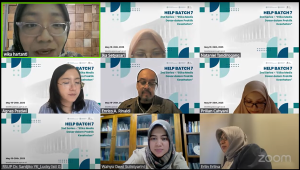
Yogyakarta, December 3, 2025 — The Center for Bioethics and Medical Humanities (CBMH), Faculty of Medicine, Public Health, and Nursing, Universitas Gadjah Mada (FK-KMK UGM), in collaboration with the Master’s Program in Bioethics UGM, successfully organized the Certified Courses on Bioethics for Health Professionals (HELP) Batch 7 – Fourth Series, themed “Bioethics in Health Care Services (Part 1).”

Conducted over six days, from 26 November to 3 December 2025, this training program was designed to strengthen the ethical competence of health professionals in responding to increasingly complex ethical dilemmas within Indonesia’s health care system.

The fourth series focused on ethical foundations, case analysis, and clinical dilemmas situated within Indonesia’s socio-cultural context. Through a comprehensive set of sessions, participants were introduced to various ethical frameworks applicable to complex clinical situations, including the four principles of bioethics, the four-box method, and casuistry-based approaches. The program opened with an orientation session led by the organizing committee, followed by an introductory lecture by dr. Nur Azid Mahardinata, M.Bio.Et, who emphasized the importance of shared expectations in the learning process.

Ethical Frameworks and Clinical Decision-Making

On the first day, Dr. CB Kusmaryanto, SCJ delivered a critical reflection on the four basic principles of bioethics and their limitations when applied to cases deeply influenced by cultural and religious values. The discussion was followed by a session led by dr. Nur Azid, who introduced multiple ethical frameworks, enabling participants to compare and select the most appropriate approaches based on specific clinical contexts.

The second day explored fundamental issues in the doctor–patient relationship. Dr. dr. Siswanto Sastrowitjoto, Sp.THT(K) guided participants in evaluating the validity of informed consent in complex situations, such as diminished decision-making capacity and strong family involvement. Interactive breakout-room case discussions enriched the session. Subsequently, dr. Nur Azid addressed challenges related to medical confidentiality in the era of digital health and telemedicine, including regulatory compliance and risk mitigation strategies.

Communication, Culture, and Ethical Sensitivity

The third day emphasized ethical skills and cultural sensitivity. Prof. Dra. Yayi Suryo Prabandari, M.Si., Ph.D discussed communication as an ethical practice and demonstrated empathetic delivery of bad news through role-playing simulations. This was followed by a session with Prof. Syafaatun Almirzanah, M.A., M.Th., Ph.D., D.Min, who highlighted the importance of cultural competence in clinical practice, particularly in integrating patients’ cultural values into medical decision-making without compromising professional standards.

Ethical Dilemmas Across the Life Cycle

On the fourth day, discussions focused on ethical dilemmas at the beginning of life. Dr. Agung Dewanto, Sp.OG(K), Ph.D guided participants through structured debates on assisted reproductive technologies, including IVF, surrogacy, and embryo selection. The session continued with Dr. Endah Rahmawati, Sp.OG, Ph.D, who explored ethical considerations in prenatal diagnosis and therapy, as well as counseling strategies when genetic abnormalities are identified.

The fifth day addressed ethical challenges in caring for vulnerable populations. Dr. dr. Nurnaningsih, Sp.A(K) examined the application of the best interest principle in medical decision-making for neonates and children, including vaccination and intensive care issues. This was followed by Dr. dr. Probosuseno, Sp.PD, K.Ger, SE, MM, who discussed ethical issues in geriatric care, particularly in distinguishing beneficial treatment from futile care and respecting patient autonomy amid declining decision-making capacity.

Legal Integration and Ethical Governance

The program concluded on 3 December 2025 with a session on the legal aspects of medical ethics, delivered by Dr. dr. Darwito, SH, Sp.B, Subsp.Onk(K). This session provided a comprehensive overview of legal protection for physicians and health institutions, clarifying distinctions between ethical violations, disciplinary actions, and malpractice, as well as emphasizing risk mitigation through proper medical documentation. The training concluded with a session on ethical organizations within health institutions, followed by a post-test and participant reflection to evaluate competency development.

This training reaffirmed CBMH UGM’s commitment to strengthening the capacity of Indonesian health professionals—not only in ethical knowledge, but also in cultural sensitivity, communication skills, and legal awareness. Through continuous professional education initiatives such as the HELP Course, CBMH UGM contributes to the advancement of Sustainable Development Goals (SDGs), particularly SDG 3 (Good Health and Well-Being), SDG 4 (Quality Education), and SDG 10 (Reduced Inequalities), by promoting ethical, inclusive, and high-quality health care services.

Editor: Rafi


Upholding Ethics in Health and Medical Research: HELP Course Batch 7 – 3rd Series

HELP COURSE BATCH 7 SERI 3 - BIOETIKA - ETIKA PENELITIAN

Yogyakarta, August 26, 2025 — Amid the rapid advancement of health and medical research, a fundamental question arises: how can research generate new knowledge while continuing to uphold human rights, dignity, and safety? This critical question formed the foundation of the HELP (Humanity–Ethics–Legal–Professionalism) Course Batch 7 – Third Series, which focused on the theme “Health and Medical Research.”

The HELP Course is a flagship educational program regularly organized by the Center for Bioethics and Medical Humanities (CBMH), Faculty of Medicine, Public Health, and Nursing, Universitas Gadjah Mada (FK-KMK UGM). The course is open to healthcare professionals from diverse backgrounds and aims to equip participants with both theoretical understanding and practical competencies in medical ethics and health humanities. Structured into six thematic series, the program is designed to be applicable not only in professional practice but also in the everyday ethical decision-making of healthcare professionals.

The third series was conducted online from 18–26 August 2025 and brought together participants from universities, hospitals, research institutions, and government agencies across Indonesia. The high level of participation reflected a growing awareness that high-quality research must go hand in hand with ethical integrity.

Over the course of seven days, the program featured leading experts in bioethics who delivered comprehensive sessions on a wide range of topics, including the history and importance of research ethics, responsible conduct of research, and ethical review processes by research ethics committees. Contemporary issues, such as the use of Artificial Intelligence (AI) in medical research, were also critically examined. Participants further deepened their understanding of key international ethical standards, including the Declaration of Helsinki, the Belmont Report, and the CIOMS Guidelines.

Practical and context-specific ethical challenges were discussed extensively, covering issues such as informed consent, the involvement of vulnerable populations, data confidentiality and protection, biobank research ethics, and ethical considerations in social and health humanities research. The interactive discussions highlighted that ethics should not be viewed as a barrier to research, but rather as a foundation for producing knowledge that is responsible, just, and centered on humanity.

The course concluded with a post-test and collective reflection session. Beyond reinforcing ethical awareness at every stage of research, this series also contributed to the achievement of the Sustainable Development Goals (SDGs), particularly SDG 3 (Good Health and Well-Being) through the promotion of safe and ethical health research, and SDG 17 (Partnerships for the Goals) by fostering collaboration among academics, healthcare professionals, and research institutions nationwide.

With the completion of the HELP Course Batch 7 – Third Series, participants are expected to become agents of change, promoting ethical, responsible, and human-centered research practices in their respective institutions and professional environments.

Editor: Rafi

Strengthening Medical Ethics in Indonesian Healthcare Practice: HELP Batch 7 – 2nd Series

HELP COURSE BIOETIKA HUMANIORA MEDICAL ETHICS

Yogyakarta, 26 May 2025 — The Master’s Program in Bioethics, Universitas Gadjah Mada, through the Center for Bioethics and Medical Humanities (CBMH UGM), successfully conducted the HELP Certified Training Program Batch 7 – Second Series, entitled “Basic Medical Ethics in Healthcare Practice”, from 19–26 May 2025. The program was delivered online via Zoom Meeting and formed part of UGM’s commitment to advancing the Sustainable Development Goals (SDGs), particularly SDG 3 (Good Health and Well-Being) and SDG 4 (Quality Education), by strengthening the ethical capacity of healthcare professionals in responding to contemporary challenges.

This series featured interdisciplinary experts from CBMH UGM, the Faculty of Medicine UGM, Universitas Sanata Dharma, UIN Sunan Kalijaga, and Dr. Sardjito General Hospital. The speakers delivered in-depth and practical sessions covering biomedical ethical principles, clinical empathy, socio-cultural dimensions of care, justice in healthcare, and digital ethics in modern health systems.

On the first day, Dr. Nur Azid Mahardinata, M.Bio.Et., opened the course by emphasizing the importance of integrating medical science with the humanities to understand patients holistically. Erlin Erlina, SIP, MA, Ph.D., highlighted socio-cultural dynamics in patient–healthcare provider relationships, while another session explored justice in healthcare resource allocation through locally grounded case studies.

The second day featured Dr. CB. Kusmaryanto, SCJ, who elaborated on the four core principles of bioethics—autonomy, beneficence, non-maleficence, and justice—followed by Dr. dr. Ronny Triwirasto, Sp.KJ, who discussed ethical conflicts within healthcare teams from multidisciplinary perspectives.

On the third day, Dr. Indria Laksmi Gamayanti, M.Psi., Psychologist, underscored the role of clinical empathy in improving the quality of doctor–patient relationships. This was followed by sessions led by Dr. Wika Hartati, MIH, and Dr. Nur Azid Mahardinata, focusing on ethical considerations in healthcare policy and resource distribution.

The fourth day featured Prof. Syafaatun Almirzanah, Ph.D., D.Min., who highlighted the importance of cultural and religious sensitivity in healthcare practice, emphasizing that understanding patients’ spiritual backgrounds is essential for ethical decision-making. The discussion continued with drg. Agnes Bhakti Pratiwi, Ph.D., who stressed the need for ethical analysis in Indonesia’s public health system.

On the fifth day, Dr. CB. Kusmaryanto, SCJ, offered a constructive critique of Western principlism in bioethics, noting its limited applicability within local cultural contexts. Subsequently, Dr. dr. Darwito, Sp.B(K) Onk., addressed ethical challenges in teaching hospitals, including patient advocacy and the protection of patient rights in clinical education settings.

The program concluded on the sixth day with a session by Dr. Lutfan Lazuardi, Ph.D., who examined the ethical implications of digital transformation in healthcare, particularly the use of Artificial Intelligence and the importance of data protection in medical decision-making.

In addition to up-to-date and relevant content, participants received a certificate accredited by the Indonesian Ministry of Health, full course materials, and opportunities for credit transfer to the Master’s Program in Bioethics UGM. Participants came from diverse professional and regional backgrounds across Indonesia, including lecturers and educators in medicine, nursing, pharmacy, midwifery, and other health sciences; healthcare professionals from public and private hospitals; primary care providers; and private practitioners such as doctors and nurses. This diversity reflects the growing demand for contextual, inclusive, and sustainable medical ethics education in Indonesia.

For more information on upcoming programs, please visit bioethics.fk.ugm.ac.id or follow @cbmh_ugm on Instagram.

Editor: Rafi

CBMH FK-KMK UGM Revives In-Person HELP Course to Strengthen Foundational Bioethics Education

Center for Bioethics and Medical Humanities (CBMH FK-KMK UGM) once again organized the HELP Course (Humanity–Ethics–Legal–Professionalism) Batch 6 in an offline (in-person) format, marking its return to face-to-face implementation since the COVID-19 pandemic. The three-day program was held from Wednesday, 8 March to Friday, 10 March, at Tara Hotel, Yogyakarta, and was attended by participants from various cities across Indonesia. As the organizing institution, CBMH FK-KMK UGM carried the theme “1st Series: The Basic Understanding of Bioethics.”

During the HELP Course 1st Series, participants took part in five core sessions, including Introduction to Bioethics, Humanity and Ethics, Ethics and Law, and Professionalism Aspects in Relation to Bioethics. These sessions provided participants with foundational knowledge and critical perspectives on the integration of ethical principles within healthcare practice and education.

In addition to the formal learning sessions, the course also featured an “Angkringan” discussion session with dr. Ahmad Hamim Sadewa, Ph.D., Vice Dean for Academic and Student Affairs of FK-KMK UGM. This informal yet insightful discussion addressed the topic “Code of Ethics for Teaching Hospitals: Is It Specifically Necessary?”, encouraging open dialogue and critical reflection among participants.

Through the implementation of this offline HELP Course, CBMH FK-KMK UGM reaffirmed its commitment to strengthening bioethics education and fostering meaningful engagement among healthcare professionals, educators, and policymakers in a collaborative learning environment.

Editor : Rafi

Highlighting Bioethics Education, CBMH FK-KMK UGM Conducts HELP Course Series 6 Course, HELP Course

Center for Bioethics and Medical Humanities (CBMH FK-KMK UGM) has successfully completed its regular HELP Course (Humanity–Ethics–Legal–Professionalism) Series 6, Batch 5, carrying the main theme “HELP Aspects in Medical Education.” The program was conducted over eight sessions, held from 30 August to 22 September 2022.

Delivered in a fully virtual format, the course was attended by participants from various backgrounds, including healthcare practitioners and professionals involved in medical education institutions. The diversity of participants enriched discussions and reflected the growing need for structured bioethics education across healthcare and academic settings.

As the organizing institution, CBMH FK-KMK UGM curated a range of essential topics in bioethics education. These included the fundamentals of teaching bioethics, strategies for bioethics instruction, assessment methods in bioethics education, development of teaching materials, and key ethical issues in higher education.

In addition to theoretical sessions, the course also featured two dedicated practical sessions, allowing participants to directly apply the knowledge and concepts they had acquired throughout the program.

Through the implementation of the HELP Course Series 6, CBMH FK-KMK UGM reaffirmed its commitment to strengthening capacity in bioethics education and supporting the development of educators and practitioners who are ethically grounded, professionally competent, and responsive to the evolving challenges of medical education.

Editor : Rafi