Tag Archive for: SDGs 16

Enhancing Ethical Capacity in Healthcare: A Workshop on Ethical Decision-Making

ethics-and-decision-making

Amid the rapid advancement of medical technology and artificial intelligence, healthcare professionals are increasingly confronted with complex decisions, not only about what is clinically effective, but also about what is morally right. In this evolving landscape, the ability to make sound ethical decisions has become more essential than ever.

As part of its commitment to fostering ethical competence in healthcare, the Center for Bioethics and Medical Humanities (CBMH), Universitas Gadjah Mada, organized a two-day workshop titled “Ethics in Decision Making for Healthcare Professionals” on October 2–3, 2025. The event took place at the 8th Floor Auditorium of the Tahir Building, Faculty of Medicine, Public Health, and Nursing UGM.

The workshop featured four distinguished speakers: Prof. D.L. (Dick) Willems, MD, PhD from Amsterdam UMC; Prof. Syafaatun Almirzanah, Ph.D; Dr. CB Kusmaryanto, SCJ; and drg. Agnes Bhakti Pratiwi, MPH, Ph.D. Participants included healthcare practitioners, academics, and students from across Indonesia, all demonstrating strong enthusiasm in exploring ethical dilemmas commonly encountered in medical practice.

Across eight sessions, participants were guided to identify, analyze, and resolve ethical challenges in professional settings. In the session titled “Identifying Ethical Situations in Healthcare Services,” Prof. Dick Willems presented the case study “Kitty,” illustrating how conflicts of values can create profound dilemmas for healthcare providers. He introduced two major moral theories—Deontology (duty-based ethics) and Consequentialism (outcome-based ethics)—and connected them to contemporary issues such as big data, genetic engineering, and emerging medical technologies.

Meanwhile, drg. Agnes Bhakti Pratiwi introduced the framework of Virtue Ethics, emphasizing the importance of character and practical wisdom in ethical decision-making. She highlighted that being a good healthcare professional requires not only clinical expertise but also honesty, empathy, responsibility, and moral courage.

Prof. Syafaatun Almirzanah further underscored the importance of cultural competence in serving patients from diverse backgrounds. According to her, healthcare professionals must understand not only the patient’s illness but also the person behind it. “AI and medical technology cannot replace empathy,” she affirmed.

In addition, Prof. Willems introduced the “Ethical Toolkit for Decision Making” developed by the Dutch Medical Association—a structured six-step framework designed to help healthcare professionals systematically analyze and address ethical issues in clinical practice.

Another session led by Dr. CB Kusmaryanto explored ethical dilemmas in healthcare services, while the closing session facilitated by drg. Agnes Bhakti Pratiwi encouraged participants to formulate concrete action plans for integrating ethical values into their professional environments.

Beyond enhancing participants’ professional competencies, the workshop also contributed to the achievement of the Sustainable Development Goals (SDGs), particularly SDG 3 (Good Health and Well-being) and SDG 16 (Peace, Justice, and Strong Institutions).

Through this initiative, UNESCO Chair on Bioethics UGM reaffirms its commitment to strengthening the role of bioethics as a fundamental pillar for more humane, just, and sustainable healthcare services.


Reporter: Ardhini N, MKM
Editor: Rafi

Rapid Advances in Medical Technology and Emerging Ethical Dilemmas

RABOAN BIOETHICS UGM

Rapid developments in medical technology have brought forward innovations that promise improved quality, efficiency, and accessibility of health care services. At the same time, these advances raise fundamental ethical questions: to what extent should technology be applied in medical practice, how can patient safety and dignity be safeguarded, and who bears responsibility when innovation outpaces ethical reflection and regulation. These critical issues formed the starting point of the RABOAN (Research and Perspective Sharing) forum.

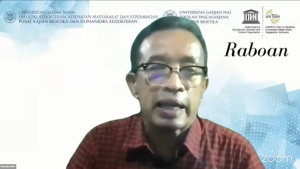
The RABOAN session held on Wednesday, 28 January 2026, was organized by the Center for Bioethics and Medical Humanities (CBMH), Faculty of Medicine, Public Health, and Nursing (FKKMK), Universitas Gadjah Mada, in collaboration with the Master’s Program in Bioethics, Universitas Gadjah Mada. The discussion addressed the theme “Medical Technology: Ethics and Challenges” and featured Dr. dr. Carolina Kuntardjo, SpB., FINACS, S.H., M.H., a surgeon with extensive expertise in health law and medical ethics, as the main speaker. The session was moderated by NS Wahyu Dewi Sulistyarini, M.S.N.

In her presentation, Dr. Carolina emphasized that advances in medical technology cannot be separated from ethical responsibility and professional integrity. Technologies such as artificial intelligence, health information systems, robotic surgery, and telemedicine are designed to enhance health care delivery. However, without adequate ethical understanding and competence, these technologies may generate new risks for patients, health professionals, and health institutions.

A key point highlighted during the discussion was the importance of strengthening ethics education for health professionals. Dr. Carolina noted that while many young practitioners are highly familiar with new technologies, they are often insufficiently equipped with ethical frameworks to guide their use in clinical practice. Senior health professionals therefore play a crucial role in transmitting ethical values and professionalism to the next generation, ensuring that technological progress does not compromise patient safety or human dignity.

The discussion also addressed issues of patient data privacy and confidentiality in the digital era. The digitalization of medical records, the use of health applications, and collaboration with third parties increase the risk of data breaches and legal consequences. Patient data, as emphasized in the forum, constitute a fundamental patient right and must be protected through secure, authorized systems that comply with ethical standards and existing regulations.

In relation to telemedicine and telehealth services, participants were reminded that remote care has clear limitations and cannot fully replace physical examinations. Telemedicine remains subject to ethical and legal accountability, requiring clear regulatory frameworks and enhanced capacity-building for health professionals to ensure safe and high-quality care.

The forum further discussed challenges to medical professionalism in the context of social media and the promotion of health services. Health information shared with the public must be evidence-based, proportional, and ethically responsible. Excessive promotion, misleading testimonials, or practices that undermine professional peers were identified as ethical, disciplinary, and legal violations that risk eroding public trust in the medical profession.

RABOAN BIOETHICS UGM

In closing, Dr. Carolina reaffirmed that ethics lie at the core of professional competence in medicine. Not everything that is technically possible can be ethically justified. The doctor–patient relationship must remain central to medical practice, and all technological innovations should ultimately serve to protect patient safety, promote well-being, and uphold human dignity.

Through this RABOAN session, CBMH FKKMK UGM and the Master’s Program in Bioethics UGM reaffirm their commitment to advancing ethical reflection on health technologies. Such discussions are closely aligned with the Sustainable Development Goals (SDGs), particularly SDG 3 (Good Health and Well-being), SDG 16 (Peace, Justice, and Strong Institutions), and the promotion of responsible and equitable innovation. By placing ethics at the foundation of technological development, medical innovation can meaningfully contribute to sustainable, trustworthy, and patient-centered health systems.


About RABOAN
RABOAN (Research and Perspective Sharing) is a regular discussion forum organized by CBMH FKKMK UGM in collaboration with the Master’s Program in Bioethics UGM, providing a multidisciplinary space for critical reflection on bioethical issues across diverse fields.

Editor: Rafi

From the Classroom to the Clinic: Everyday Ethical Dilemmas in Medical Professional Education

CBMH FKKMK UGM RABOAN

Yogyakarta, 21 January 2026 — Raboan Research and Perspective Sharing opened its 2026 series by featuring dr. Risahmawati, Dr.Med.Sc., MARS (Faculty of Medicine, UIN Syarif Hidayatullah Jakarta) as the keynote speaker. The session served as an interactive forum to discuss the ethical challenges frequently faced by medical professional students in clinical settings.

Risahmawati shared her experience in integrating clinical ethics education from the early stages of professional training, encouraging students to reflect on real-life ethical dilemmas through structured discussions, presentations, and feedback from faculty members and clinicians. “Ethical dilemmas are not something to be avoided, but rather to be understood and managed critically,” she emphasized.

Participants discussed concrete cases ranging from being asked to perform medical procedures beyond their authority during overcrowded emergency departments, to verbal bullying in front of patients, unclear informed consent processes, the unauthorized use of patient photographs for educational purposes, and dilemmas surrounding educators’ professionalism in student assessment.

The forum underscored that professional medical education is a critical phase in shaping ethical character. Clinical lecturers were highlighted as key role models, while institutions were urged to provide safe spaces for ongoing ethical reflection and dialogue. Stakeholders including students, educators, healthcare professionals, and hospital management, were also encouraged to work together to foster a more humane and ethical medical education system.

The topic aligns with the Sustainable Development Goals (SDGs), particularly SDG 3 (Good Health and Well-being), SDG 4 (Quality Education), and SDG 16 (Peace, Justice and Strong Institutions), through strengthening ethical healthcare services, integrity-based medical education, and a culture of justice, transparency, and accountability.


Reporter: Ika Setyasari, S.Kep.Ns., M.N.Sc

Editor : Rafi

International Bioethics and Humanities Conference (IBHC) 2024 Highlights: Bioethics at the Crossroads of Humanity, Technology, and Environmental Sustainability


The International Bioethics and Humanities Conference (IBHC) 2024 was successfully organized by the Center for Bioethics and Medical Humanities (CBMH), Faculty of Medicine, Public Health, and Nursing (FK-KMK) Universitas Gadjah Mada, as part of its role as a UNESCO Chair on Bioethics, in collaboration with the Master’s Program in Bioethics, Universitas Gadjah Mada. The conference brought together global scholars, practitioners, and policymakers to explore the evolving role of bioethics in preserving humanity amid environmental crises and rapid technological advancement.

Held at The Alana Hotel Yogyakarta, this multidisciplinary forum provided a space for critical dialogue at the intersection of bioethics, technology, health, and environmental sustainability.

The conference was officially opened by Prof. dr. Ova Emilia, M.Med.Ed., Sp.OG(K)., Ph.D, Rector of Universitas Gadjah Mada, who symbolically struck the gong to mark the commencement of IBHC 2024. The opening ceremony was followed by a photo session reflecting the collective commitment of participants and speakers to advancing bioethics and humanities for a more sustainable and humane future.

Throughout the conference, symposium sessions addressed a wide range of pressing bioethical issues. Key discussions included biobanking ethics in Southeast Asia, focusing on informed consent, data privacy, and equitable data governance to support responsible health innovation. Sessions on bioethics education emphasized the integration of ethics into higher education through interactive and reflective learning approaches to nurture ethical leadership.

The theme of precision medicine explored ethical challenges related to genomic data protection, dynamic consent models, and equitable access to advanced medical technologies. Meanwhile, healthcare ethics sessions examined dilemmas in palliative care, rare diseases, and culturally sensitive medical decision-making. Additional topics included ethical research practices, the integration of traditional medicine, and the role of local wisdom in environmental sustainability through eco-village development and natural dye revitalization.

Plenary discussions featured distinguished speakers, including Dicky Sofjan, Ph.D., Ir. Laretna T. Adishakti, M.Arch., and Prof. Dr. Ir. Edia Rahayuningsih, MS., IPu., who offered critical perspectives on the intersections of bioethics, culture, technology, and sustainability.

In addition to the symposiums, IBHC 2024 hosted oral and poster presentation competitions on November 7, attracting participants from various academic and professional institutions. Presentations were evaluated by expert judges based on thematic relevance, ethical depth, and methodological rigor. The top three winners from both categories were announced during the closing session.

Aligned with the Sustainable Development Goals (SDGs)—particularly SDG 3 (Good Health and Well-being), SDG 10 (Reduced Inequalities), SDG 13 (Climate Action), and SDG 16 (Peace, Justice, and Strong Institutions)—IBHC 2024 reaffirmed the importance of bioethics as a foundational framework for inclusive, just, and sustainable responses to global challenges. Through interdisciplinary dialogue and international collaboration, the conference underscored bioethics as a key driver in preserving humanity in an increasingly complex and interconnected world.

Editor : Rafi

Strengthening Ethics, Humanity, Law, and Professionalism in Healthcare: HELP Bioethics Course Batch 7 Series 1

kursus bioetika help batch 7 seri 1

Yogyakarta, 26 March 2025 — The Center for Bioethics and Medical Humanities (CBMH), Faculty of Medicine, Public Health, and Nursing, Universitas Gadjah Mada, successfully organized the HELP Bioethics Course (Humanity–Ethics–Legal–Professionalism) Batch 7 Series 1, conducted online via Zoom from 17–26 March 2025. This series carried the theme “The Basic Understanding of Bioethics” and was attended by 44 participants from various institutions and faculties of medicine across Indonesia.

Participants consisted of lecturers, healthcare practitioners, and policymakers who share a strong commitment to integrating ethics, humanity, law, and professionalism within the healthcare system. Throughout the eight-day program, participants engaged in intensive theoretical sessions and in-depth discussions covering the foundations of bioethics, the relationship between ethics and law, ethical theories such as utilitarianism, deontology, and virtue ethics, as well as issues related to professionalism and justice in medical practice.

Adopting a transdisciplinary approach, the course also explored the contributions of anthropology, religion, and social sciences in shaping bioethical understanding within Indonesia’s diverse sociocultural context. The presence of distinguished speakers from national and international institutions, including Harvard Medical School and Amsterdam UMC, enriched participants’ global and local perspectives on ethical and moral challenges in contemporary healthcare.

The HELP Course is part of CBMH UGM’s ongoing commitment to supporting the achievement of the Sustainable Development Goals (SDGs), particularly SDG 3 (Good Health and Well-Being), SDG 4 (Quality Education), and SDG 16 (Peace, Justice, and Strong Institutions). By fostering ethical awareness, moral reflection, and professional attitudes in decision-making, this program is expected to contribute to the development of healthcare professionals who are not only clinically competent, but also firmly grounded in human dignity and social justice.

Through this program, CBMH UGM reaffirms its role as a platform for learning and knowledge-sharing in bioethics and medical humanities. The HELP Course supports participants’ personal and professional growth while contributing to the creation of a healthcare system that is more equitable, inclusive, sustainable, and respectful of human dignity.


Editor: Rafi

HELP Course Batch 6 – 6th Series : Strengthening Bioethics in Medical Education

The HELP Course (Humanity–Ethics–Legal–Professionalism) 6th Series, Batch 6 was successfully conducted from Wednesday to Friday, 25–27 September 2024, at Hotel MM UGM, Yogyakarta. This sixth series focused on Bioethics in Medical Education, bringing together healthcare professionals and academics committed to strengthening ethical awareness and teaching strategies in medical education.

This program aimed to enhance participants’ understanding of ethical principles in medical education and to equip them with effective strategies for teaching bioethics in academic and clinical settings. The course aligns closely with the Sustainable Development Goals (SDGs), particularly SDG 4 (Quality Education) by promoting ethical competence among educators, and SDG 3 (Good Health and Well-Being) through the development of ethically grounded healthcare professionals.

Global Perspectives on Ethics in Medical Education

The first day of the HELP Course opened with a session titled “Global Health Ethics: Addressing Disparities in Medical Education and Clinical Practice”, delivered by Prof. Dr. dr. Soenarto Sastrowijoto, Sp.THT(K). In this session, Prof. Soenarto discussed the importance of addressing inequalities and integrating bioethics into both medical education and clinical practice. He emphasized that academics must develop a comprehensive understanding of bioethics in order to teach it effectively within their respective institutions.

He concluded the session with a reflective message on the educator–student relationship, highlighting the importance of patience, mentorship, and mutual respect in academic environments.

Innovative Approaches to Teaching Bioethics

The following session explored teaching strategies in bioethics through “Narrative Ethics: Advanced Techniques in Ethical Discourse”, presented by Dr. Dra. Retna Siwi Padmawati, M.A. She underlined the importance of listening, giving time to patients, respecting patients’ experiences, and understanding illness from a humanistic perspective. According to her, narrative ethics and medical narratives serve as essential methods for cultivating empathy and ethical sensitivity, as “narrative creates a voice.”

This session was followed by presentations on multimedia-based approaches to bioethics education, including the use of films, arts, and virtual reality. Participants also discussed the role of simulation in ethics education, which allows learners to engage with ethical dilemmas without compromising patient safety.

Interdisciplinary Learning and Ethical Reflection

The final day of the HELP Course featured interdisciplinary approaches to bioethics education delivered by three speakers. These interactive sessions encouraged participants to actively engage in discussions and practical exercises addressing ethical challenges and moral education in university settings. Participants gained valuable insights into navigating ethical dilemmas within medical education while fostering professionalism and moral responsibility.

Through this course, CBMH FK-KMK UGM reaffirmed its commitment to advancing bioethics education as a foundation for ethical healthcare systems. By strengthening educators’ capacity in bioethics, the HELP Course contributes to building inclusive, ethical, and sustainable health and education institutions, in line with SDG 3 (Good Health and Well-Being), SDG 4 (Quality Education), and SDG 16 (Peace, Justice, and Strong Institutions).

Editor : Rafi

Learning Clinical Ethics: Upholding Human Dignity During Life and End-of-Life Care

On Wednesday, 15 May 2024, the Center for Bioethics and Medical Humanities, Faculty of Medicine, Public Health, and Nursing, Universitas Gadjah Mada (CBMH FK-KMK UGM), conducted the first day of a bioethics course with an in-depth focus on Clinical Ethics During Life and at the End of Life. The course was attended by healthcare professionals and academics who are keen to deepen their understanding of ethical issues in medical practice. This program aimed to enhance participants’ capacity to uphold human dignity in various clinical situations, both during life and in end-of-life care.

The first day of the course opened with a compelling session entitled “Preserving Human Dignity: During Life and Dying” delivered by Prof. Dr. Christantie Effendy, S.Kp., M.Kes. Participants were introduced to key concepts related to safeguarding human dignity under all circumstances, including during the dying process. Particular emphasis was placed on empathy, respect for patient autonomy, and honoring patients’ values and wishes.

The following session was led by Prof. dr. Moh. Hakimi, Sp.OG(K), Ph.D., who discussed ethical decision-making processes in clinical practice. Through interactive discussions and case studies, participants gained deeper insights into how medical decisions should be made by carefully balancing ethical principles with patients’ best interests. This session highlighted the complexity of ethical dilemmas commonly faced in healthcare settings.

The importance of cultural competence in healthcare services in Indonesia became a central theme in the subsequent session. Participants were encouraged to recognize and respect cultural diversity as a crucial element in providing sensitive, ethical, and effective healthcare services for Indonesia’s pluralistic society. The course concluded with a session entitled “Truth Telling and Withholding Information”, led by Dr. dr. Nurnaningsih, Sp.A(K). This discussion explored ethical dilemmas surrounding information disclosure to patients, including when it is ethically appropriate to disclose the full truth and when withholding information may be justified. Participants were guided on navigating these complex situations with sensitivity, professionalism, and integrity.

Overall, this bioethics course contributed significantly to strengthening ethical awareness and practical skills among healthcare professionals. The program aligns closely with the Sustainable Development Goals (SDGs), particularly SDG 3: Good Health and Well-Being, by promoting ethical, patient-centered healthcare, and SDG 16: Peace, Justice, and Strong Institutions, through capacity building and the reinforcement of ethical decision-making within healthcare institutions.

Editor : Rafi

CBMH FK-KMK UGM Hosts Angkringan Forum Highlighting the Open Science Movement

Yogyakarta — Limited access to scientific journals has long been a barrier for researchers and academics in obtaining high-quality scholarly resources. This challenge has fueled growing discourse on Open Science, a movement advocating for greater openness and accessibility in scientific knowledge. The COVID-19 pandemic provided a clear example of Open Science in practice, as many publishers temporarily opened free access to scientific journals. This was highlighted by Prof. dr. Gandes Retno Rahayu, M.Med.Ed., Ph.D., during the Angkringan HELP Course 3rd Series: Open Science and Ethics, held on Thursday, 24 August 2023.

While Open Science offers significant benefits for researchers and academics, it also presents a number of challenges. “A movement like this cannot be viewed from only one perspective; there will always be possible negative consequences,” Prof. Gandes emphasized.

She explained that appropriate controls are necessary to safeguard data and knowledge that are made openly accessible. In certain contexts, unrestricted openness may pose risks to human rights, security, personal privacy, sacred and confidential indigenous knowledge, and even the protection of endangered species. For this reason, UNESCO stresses that Open Science must be supported by adequate infrastructure, active engagement of social actors, and ongoing dialogue with diverse knowledge systems.

UNESCO has also outlined a set of core values and principles to guide the Open Science movement in a responsible and ethical manner. These values include quality and integrity, collective benefit, equity and fairness, and diversity and inclusiveness. The guiding principles further encompass transparency, scrutiny, critique, and reproducibility, equality of opportunity, responsibility, respect, and accountability, collaboration, participation, and inclusion, as well as flexibility and sustainability.

This discussion is closely aligned with the Sustainable Development Goals (SDGs), particularly SDG 4: Quality Education, by promoting equitable access to scientific knowledge and lifelong learning opportunities; SDG 9: Industry, Innovation, and Infrastructure, through the development of open and inclusive research ecosystems; and SDG 16: Peace, Justice, and Strong Institutions, by strengthening transparency, accountability, and ethical governance in the production and dissemination of knowledge. By fostering dialogue on Open Science and ethics, CBMH FK-KMK UGM contributes to the advancement of a more inclusive, responsible, and sustainable global scientific community.

Editor : Rafi

Strengthening Ethical Research Practices: CBMH FK-KMK UGM Hosts HELP Course on Medical and Health Research

Yogyakarta — The Center for Bioethics and Medical Humanities, Faculty of Medicine, Public Health, and Nursing, Universitas Gadjah Mada (CBMH FK-KMK UGM), organized the HELP Training Program (Humanity–Ethics–Legal–Professionalism) under the theme “3rd Series – Medical/Health Research” from 23–25 August 2023. Held at The Atrium Hotel and Resort, the program was attended by participants from various cities across Indonesia, reflecting strong national interest in ethical issues surrounding health and medical research.

Over the course of three days, participants received comprehensive learning materials on research ethics delivered by distinguished speakers in the field of bioethics. Key topics included Introduction to Research Ethics, Basic Principles of Biomedical Ethics, Informed Consent in Research, Addressing Ethical Challenges in Health-Related Research, Applying Research Ethics in Practical Scenarios, International Guidelines, and Special Issues in Health-Related Research. These sessions equipped participants with both theoretical foundations and practical insights to navigate ethical complexities in research practice.

The HELP Course also emphasized the importance of ethical governance in research as a cornerstone of responsible scientific advancement. By strengthening participants’ understanding of ethical principles, regulatory frameworks, and international standards, the program aimed to promote research practices that prioritize human dignity, participant safety, and social accountability.

This initiative aligns closely with the Sustainable Development Goals (SDGs), particularly SDG 3: Good Health and Well-Being, which underscores the role of ethical research in improving health outcomes, and SDG 4: Quality Education, through capacity building and lifelong learning for researchers and healthcare professionals. Furthermore, the focus on research ethics supports SDG 16: Peace, Justice, and Strong Institutions, by reinforcing ethical standards, transparency, and accountability in scientific and health-related research.

Through the implementation of the HELP Course Series on Medical and Health Research, CBMH FK-KMK UGM reaffirmed its commitment to advancing ethically responsible research and fostering a culture of integrity within Indonesia’s healthcare and academic communities.

Highlighting Bioethics Education, CBMH FK-KMK UGM Conducts HELP Course Series 6 Course, HELP Course

Center for Bioethics and Medical Humanities (CBMH FK-KMK UGM) has successfully completed its regular HELP Course (Humanity–Ethics–Legal–Professionalism) Series 6, Batch 5, carrying the main theme “HELP Aspects in Medical Education.” The program was conducted over eight sessions, held from 30 August to 22 September 2022.

Delivered in a fully virtual format, the course was attended by participants from various backgrounds, including healthcare practitioners and professionals involved in medical education institutions. The diversity of participants enriched discussions and reflected the growing need for structured bioethics education across healthcare and academic settings.

As the organizing institution, CBMH FK-KMK UGM curated a range of essential topics in bioethics education. These included the fundamentals of teaching bioethics, strategies for bioethics instruction, assessment methods in bioethics education, development of teaching materials, and key ethical issues in higher education.

In addition to theoretical sessions, the course also featured two dedicated practical sessions, allowing participants to directly apply the knowledge and concepts they had acquired throughout the program.

Through the implementation of the HELP Course Series 6, CBMH FK-KMK UGM reaffirmed its commitment to strengthening capacity in bioethics education and supporting the development of educators and practitioners who are ethically grounded, professionally competent, and responsive to the evolving challenges of medical education.

Editor : Rafi