Tag Archive for: SDGs 17.

SIAP PEDULI: Strengthening Family Readiness in Chronic and Palliative Care

UNESCO CHAIR ON BIOETHICS - COMMUNITY SERVICE

Caring for a family member living with a chronic or palliative condition often places a significant emotional, physical, and social burden on families. Beyond understanding medical conditions, families are expected to provide continuous emotional support while ensuring that patients can continue to live meaningful daily lives. Unfortunately, limited access to information and practical skills often leaves families feeling unprepared and overwhelmed. This reality highlights the importance of educational and empowerment initiatives that enable families to become confident and capable primary caregivers.

In response to this need, the Master’s Program in Bioethics, Graduate School of Universitas Gadjah Mada, in collaboration with the Center for Bioethics and Medical Humanities (CBMH) as part of the UNESCO Chair on Bioethics, organized a community engagement program entitled “SIAP PEDULI (Family Readiness Socialization for Chronic and Palliative Care)”. The activity was conducted on 25–26 August 2025 at RW 10 Community Hall, Bangunrejo, Kricak Village, Yogyakarta, and was attended by 50 participants, consisting of community health cadres and family representatives caring for palliative patients.

The SIAP PEDULI program focused on providing practical and applicable knowledge that families and community members can directly implement in daily care. Key sessions included Education on the Role and Benefits of Indonesia’s National Health Insurance (BPJS Kesehatan) in Palliative Care, delivered by dr. Sumono Nurbadi Putranto; Hands-on Practice Using the PEKA Palliative Care Handbook, facilitated by Dr. Dra. Retna Siwi Padmawati, M.A.; and Activity and Mobilization Care Practice, guided by drg. Agnes Bhakti Pratiwi, M.P.H., Ph.D. together with Ardhini N., M.K.M. These sessions were designed to enhance families’ confidence in managing both the administrative and practical aspects of patient care.

Through SIAP PEDULI, families are expected to gain not only a better understanding of medical and healthcare system navigation, but also practical caregiving skills that support patients’ daily needs. The program also emphasized the importance of collaboration between families, community cadres, and healthcare professionals in delivering inclusive, continuous, and compassionate care for patients with chronic and life-limiting conditions.

This initiative aligns with the commitment of UGM and the UNESCO Chair on Bioethics to advancing the Sustainable Development Goals (SDGs), particularly SDG 3 (Good Health and Well-being) through strengthened family-based care capacity, and SDG 17 (Partnerships for the Goals) by fostering synergy between academia, healthcare providers, and local communities. Through this collaborative approach, SIAP PEDULI serves not only as an educational program but also as a social movement contributing to improved quality of life for chronic and palliative patients within the community.

Editor : Rafi

Community Engagement Initiative: Healthy Living Declaration in Kricak Subdistrict, Yogyakarta

Yogyakarta, 22 November 2024 — The Center for Bioethics and Medical Humanities (CBMH), Universitas Gadjah Mada, successfully organized the Healthy Living Declaration at Segoro Amarto Field, RW 13, Kricak Subdistrict, Yogyakarta. This event marked the culmination of a series of community engagement activities that have been conducted since the previous year, aimed at strengthening health literacy and enhancing community assertiveness in accessing health services.

This community service program contributes to the achievement of the Sustainable Development Goals (SDGs), particularly SDG 3 (Good Health and Well-being), while also supporting SDG 11 (Sustainable Cities and Communities) by fostering a healthier and more resilient urban community.


The event began with a morning exercise session attended enthusiastically by dozens of local residents, followed by a communal breakfast and the distribution of door prizes in the form of plants, symbolizing a commitment to sustainable and healthy living. The activity was attended by key local stakeholders, including the Head of Tegalrejo Subdistrict Administration (Mantri Pamong Praja), the Chief of Tegalrejo Police Sector, the Commander of Tegalrejo Military District (Danramil), representatives from Tegalrejo Community Health Center (Puskesmas), officials from Kricak Subdistrict, and other members of the Forkopimtren Tegalrejo. Overall, the stakeholders expressed strong support for advancing healthy living initiatives within the Kricak community.

“We are very pleased with this initiative, because a healthy community is the foundation of societal progress,” stated the Head of Tegalrejo Subdistrict Administration.

Dr. Dra. Retna Siwi Padmawati, MA, Director of the Center for Bioethics and Medical Humanities, Faculty of Medicine, Public Health, and Nursing UGM, and Principal Investigator of the community service program, emphasized that the event was not merely ceremonial but represented a concrete step toward cultivating a sustainable culture of healthy living.

“We hope this declaration serves as the beginning of a continuous movement that inspires residents to consistently maintain their health and collective well-being,” she remarked.

The initiative received full support from the residents of Kricak Subdistrict as well as local stakeholders of Forkopimtren Tegalrejo, all of whom expressed a shared commitment to integrating healthy lifestyle practices into everyday life. The event concluded with a joint signing of the Healthy Living Declaration, led by the Head of Tegalrejo Subdistrict Administration, the Chief of the Tegalrejo Police Sector, the Commander of Danramil Tegalrejo, representatives of Tegalrejo Community Health Center, and the Head of Kricak Subdistrict.

This collaborative commitment is expected to serve as a catalyst for sustained progress through improved health literacy and community assertiveness in utilizing health services. The cross-sector collaboration demonstrated in this initiative also reinforces SDG 17 (Partnerships for the Goals), highlighting the importance of collective action in achieving sustainable health and development outcomes.

Editor : Rafi

Upholding Ethics in Health and Medical Research: HELP Course Batch 7 – 3rd Series

HELP COURSE BATCH 7 SERI 3 - BIOETIKA - ETIKA PENELITIAN

Yogyakarta, August 26, 2025 — Amid the rapid advancement of health and medical research, a fundamental question arises: how can research generate new knowledge while continuing to uphold human rights, dignity, and safety? This critical question formed the foundation of the HELP (Humanity–Ethics–Legal–Professionalism) Course Batch 7 – Third Series, which focused on the theme “Health and Medical Research.”

The HELP Course is a flagship educational program regularly organized by the Center for Bioethics and Medical Humanities (CBMH), Faculty of Medicine, Public Health, and Nursing, Universitas Gadjah Mada (FK-KMK UGM). The course is open to healthcare professionals from diverse backgrounds and aims to equip participants with both theoretical understanding and practical competencies in medical ethics and health humanities. Structured into six thematic series, the program is designed to be applicable not only in professional practice but also in the everyday ethical decision-making of healthcare professionals.

The third series was conducted online from 18–26 August 2025 and brought together participants from universities, hospitals, research institutions, and government agencies across Indonesia. The high level of participation reflected a growing awareness that high-quality research must go hand in hand with ethical integrity.

Over the course of seven days, the program featured leading experts in bioethics who delivered comprehensive sessions on a wide range of topics, including the history and importance of research ethics, responsible conduct of research, and ethical review processes by research ethics committees. Contemporary issues, such as the use of Artificial Intelligence (AI) in medical research, were also critically examined. Participants further deepened their understanding of key international ethical standards, including the Declaration of Helsinki, the Belmont Report, and the CIOMS Guidelines.

Practical and context-specific ethical challenges were discussed extensively, covering issues such as informed consent, the involvement of vulnerable populations, data confidentiality and protection, biobank research ethics, and ethical considerations in social and health humanities research. The interactive discussions highlighted that ethics should not be viewed as a barrier to research, but rather as a foundation for producing knowledge that is responsible, just, and centered on humanity.

The course concluded with a post-test and collective reflection session. Beyond reinforcing ethical awareness at every stage of research, this series also contributed to the achievement of the Sustainable Development Goals (SDGs), particularly SDG 3 (Good Health and Well-Being) through the promotion of safe and ethical health research, and SDG 17 (Partnerships for the Goals) by fostering collaboration among academics, healthcare professionals, and research institutions nationwide.

With the completion of the HELP Course Batch 7 – Third Series, participants are expected to become agents of change, promoting ethical, responsible, and human-centered research practices in their respective institutions and professional environments.

Editor: Rafi

CBMH UGM Finalizes Response to UNESCO’s Recommendation on Neurotechnology Ethics, Highlights the Need for International Oversight and Protection of Vulnerable Groups

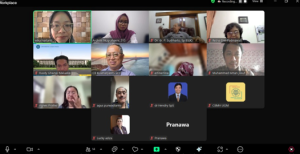
Yogyakarta, December 20, 2024 — The Center for Bioethics and Medical Humanities (CBMH UGM) successfully held a discussion to finalize its response to UNESCO’s Preliminary Report on the First Draft of The Recommendation on the Ethics of Neurotechnology. This activity aimed to provide written feedback and suggestions for the improvement of the draft recommendations on neurotechnology ethics, which will be submitted to UNESCO as a guiding document for neurotechnology ethics.
The event was attended by the UNESCO Chairs Bioethics UGM team, key stakeholders, policymakers, and expert practitioners in the application of neurotechnology in Indonesia. This collaboration supports Sustainable Development Goals (SDGs) 17, Partnership for the Goals, by fostering cooperation for sustainable development.

The feedback and recommendations provided cover two key documents: the Preliminary Report on the 1st Draft of the Recommendation on the Ethics of Neurotechnology and the First Draft of the Recommendation on the Ethics of Neurotechnology. The main points highlighted the need to expand the scope of the documents, followed by a call for more precise definitions, objectives, and the importance of respecting religious and local cultural values. This emphasis was driven by the recognition of differing values and standards between developing and developed countries.

The proposed policy also calls for the establishment of an international regulatory body responsible for overseeing the ethics of neurotechnology. Additionally, it recommends explicit protections for vulnerable groups, including individuals with critical illnesses and those in a brain-dead state. Support is also required for the use of technology in the field of neurology, including education and training for neurosurgeons.

During the development of neurotechnology, it is essential to prioritize aspects such as privacy, well-being, acceptance, and user-friendliness from the user’s perspective. In practice, neurotechnology should be designed to be easily implementable, with clear indicators for measuring success.

Furthermore, the importance of longitudinal studies was emphasized to better understand the long-term effects of implanted neurotechnology. Additional suggestions were also provided to support the refinement of UNESCO’s documents.

Reporter          : Ardhini Nugrahaeni, M.KM

Editor              : Alvira Rahmasari, S.H.G.

Exploring Public Health Ethics: Center for Bioethics and Medical Humanities UGM Welcomes Prof. Angus Dawson as a Visiting Professor in 2024

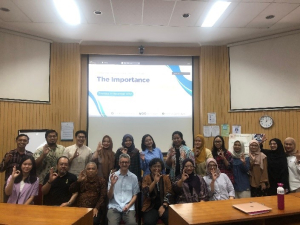
Group Photo of the Guest Lecture with Prof. Angus Dawson

Center for Bioethics and Medical Humanities at Universitas Gadjah Mada (UGM) successfully held a Visiting Professor Program from November 12 to 14, 2024. The program featured Prof. Angus Dawson from the National University of Singapore (NUS) as the main speaker. The event was conducted in a hybrid format, with in-person sessions at the Faculty of Medicine, Public Health, and Nursing (FM-PHN) UGM, as well as online via Zoom Meeting.

The event kicked off on November 12, 2024, with a workshop entitled “Joint Manuscript and Research/Project on Public Health Ethics.” This workshop aimed to strengthen research collaborations on public health ethics. The following day, a lunch discussion on bioethics and humanities education was held. In addition, a “Rabuan” seminar, a routine discussion series on public health topics, took place. The event was further enriched by an “exchange works/experience” session, where participants shared their insights and experiences.

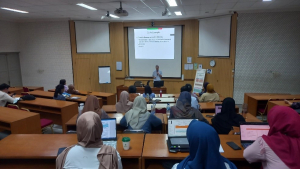
The peak of the event occurred on November 14, 2024, with a Guest Lecture by Prof. Angus Dawson. This session was the most anticipated part of the event, drawing attendance from students, academics, and practitioners. Prof. Angus presented a lecture on “The Importance of Public Health,” which delved into the concepts, values, and impact of public health. In his presentation, Prof. Angus highlighted the fundamental differences between public health and clinical care. While clinical care focuses on individual patients, public health takes a community, social, and cultural approach, aiming to protect and improve health on a larger scale.

Presentation of “The Importance of Public Health” by Prof. Angus Dawson

Key takeaways from the presentation included the notion that public health is not solely about individual treatment but also about managing health risks within communities. The ethical dimensions of public health were also emphasized, given that decisions in this field often involve moral dilemmas. For example, quarantine policies for controlling infectious diseases must balance individual freedom with the protection of public health. As a result, social justice and equity in access to healthcare services become crucial principles in decision-making processes.

This Guest Lecture played a significant role in supporting several Sustainable Development Goals (SDGs). These include SDG 3 (Good Health and Well-Being), as it discusses patient care within the social, community, and cultural context of public health. It also relates to SDG 10 (Reduced Inequalities), addressing efforts to reduce inequalities in access to healthcare services and outcomes within the “societal, community, cultural context.” Lastly, it supports SDG 16 (Peace, Justice, and Strong Institutions) through discussions on “autonomy and confidentiality” for patients, with a focus on personal data protection and human rights in healthcare.

The interactive discussion session was a highlight of the Guest Lecture. Students, academics, and practitioners actively asked questions and shared their perspectives. Several participants appreciated the relevance and depth of the discussion. One participant stated, “This guest lecture has broadened my perspective on how public health requires not only medical knowledge but also ethical considerations and policy-making skills. It is a field where science meets society.”

Through this series of events, Center for Bioethics and Medical Humanities UGM reaffirmed its role in fostering ethical discussions on public health issues. This program successfully bridged academic discourse, field practice, and policy, thereby promoting research collaboration and raising public awareness of the importance of public health in sustainable development.

Reporter        : Alvira Rahmasari, S.H.G.
Editor             : Rafi Khairuna Wibisono, S.Kom.

The Asia-Pacific Regional Stakeholder Consultation on The First Draft of UNESCO Recommendation on The Ethics of Neurotechnology

UNESCO Chair on Bioethics Universitas Gadjah Mada (UCB UGM), in collaboration with the UNESCO Jakarta office, had successfully held an Asia-Pacific Regional Consultation to discuss the draft UNESCO Recommendation on the Ethics of Neurotechnology. The event took place on June 21st 2024, virtually via Zoom Meeting platform. This consultation session was part of the process to develop the timely standard-setting instrument, UNESCO
recommendation on the Ethics of Neurotechnology. The 1st draft text of the recommendation had been produced by UNESCO Ad Hoc Expert Group (AHEG), through its 1st meeting earlier this year on 22nd – 26th April. This activity was in alignment and contributing to the realization of Sustainable Development Goals, particularly SDG 3 in ensuring healthy life and promote wellbeing for all at all age, SDG 10 in reducing inequality within and among countries and SDG 17 in strengthening implementation measures and revitalizing the global partnership for sustainable development.

This regional consultation was commenced with opening remarks from The Dean of Faculty of Medicine, Public Health and Nursing (FMPHN) UGM, Dr. Yodi Mahendradhata, M.Sc, Ph.D, FRSPH, and the Director of Center for Bioethics and Medical Humanities (CBMH), Dr. Dra. Retna Siwi Padmawati, MA, who also represented Prof. Dr. Yati Soenarto S, Sp.A (K)., Ph.D as the Chairholder of UNESCO Chair Bioethics UGM.

The UNESCO resource persons and also members of UNESCO AHEG attended this consultation session to provide background context and highlights for the draft recommendation text, as well as discussing interactively with participants. Dr. Dafna Feinholz Klip, as Chief of the Bioethics and Ethics of Science Section, within UNESCO’s Social and Human Science Sector, conveyed the process of preparing UNESCO’s draft recommendations on the Ethics of Neurotechnology. Dr. Ryota Kanai, experienced expert in neuroscience and member of UNESCO AHEG spoke on highlights of “Setting the scene: Neuroscience in the context of the draft UNESCO Recommendation”. Prof. Qingming Luo, experienced expert in neuroimaging and UNESCO AHEG member emphasized on the importance of integrating ethical frameworks into neurotechnology practice, and the role of international collaboration. The consultation session were led by two moderators dr. Rusdy Ghazali Malueka, Ph.D, Sp.S(K), expert neurologist, and dr. Wika Hartanti, MIH, bioethics faculty and executive manager of UCB UGM, both also teaching faculty at Master Bioethics UGM.

The event was attended by 58 invited participants who originated from 14 countries in Asia-Pacific region, and represented various stakeholders concerning neurotechnology development and implementation. Participants were from various backgrounds representing scientific community, healthcare providers, bioethicists, patient groups, and civil society. The interactive and lively consultation session facilitated participants’ inquiries and
feedbacks from various perspectives to improve the draft recommendation text. The discussion highlights important aspects about definition and scope of neurotechnology, and ethical concerns arising from it. Suggestions regarding values, principles and policy recommendations were made to encourage ethical, humane and sustainable development and practice of neurotechnology. Feedbacks and suggestions from this consultation session were documented, and reported back to UNESCO as representation of stakeholders’ perspectives from Asia – Pacific Region. Further details and information regarding subsequent process towards the final recommendation for Ethics in Neurotechnology is available in the UNESCO page (https://www.unesco.org/en/ethics-neurotech/expert-group?hub=83294#).

Keywords: Bioethics, Ethics, Neuroethics, Neurotechnology, Neuroscience, UNESCO, SDGs, SDGs 3, SDGs 10, SDGs 17.