
CBMH FK-KMK UGM Hosts Angkringan Forum Highlighting the Open Science Movement
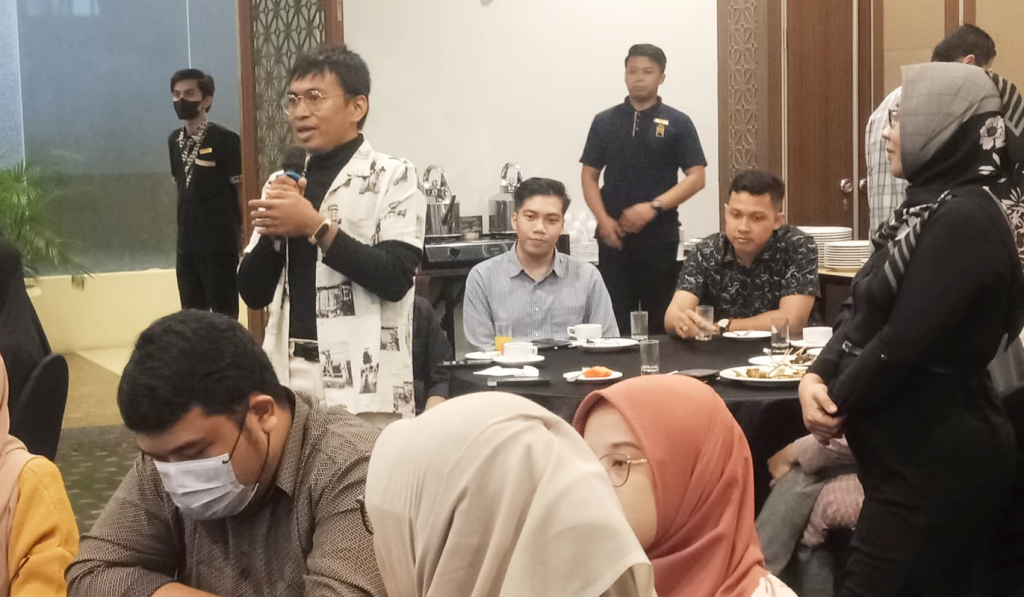
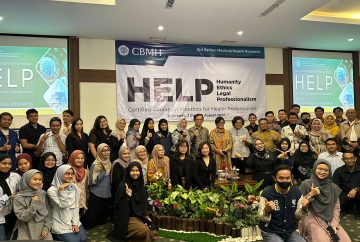
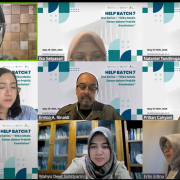
Yogyakarta — Limited access to scientific journals has long been a barrier for researchers and academics in obtaining high-quality scholarly resources. This challenge has fueled growing discourse on Open Science, a movement advocating for greater openness and accessibility in scientific knowledge. The COVID-19 pandemic provided a clear example of Open Science in practice, as many publishers temporarily opened free access to scientific journals. This was highlighted by Prof. dr. Gandes Retno Rahayu, M.Med.Ed., Ph.D., during the Angkringan HELP Course 3rd Series: Open Science and Ethics, held on Thursday, 24 August 2023.
While Open Science offers significant benefits for researchers and academics, it also presents a number of challenges. “A movement like this cannot be viewed from only one perspective; there will always be possible negative consequences,” Prof. Gandes emphasized.
She explained that appropriate controls are necessary to safeguard data and knowledge that are made openly accessible. In certain contexts, unrestricted openness may pose risks to human rights, security, personal privacy, sacred and confidential indigenous knowledge, and even the protection of endangered species. For this reason, UNESCO stresses that Open Science must be supported by adequate infrastructure, active engagement of social actors, and ongoing dialogue with diverse knowledge systems.
UNESCO has also outlined a set of core values and principles to guide the Open Science movement in a responsible and ethical manner. These values include quality and integrity, collective benefit, equity and fairness, and diversity and inclusiveness. The guiding principles further encompass transparency, scrutiny, critique, and reproducibility, equality of opportunity, responsibility, respect, and accountability, collaboration, participation, and inclusion, as well as flexibility and sustainability.
This discussion is closely aligned with the Sustainable Development Goals (SDGs), particularly SDG 4: Quality Education, by promoting equitable access to scientific knowledge and lifelong learning opportunities; SDG 9: Industry, Innovation, and Infrastructure, through the development of open and inclusive research ecosystems; and SDG 16: Peace, Justice, and Strong Institutions, by strengthening transparency, accountability, and ethical governance in the production and dissemination of knowledge. By fostering dialogue on Open Science and ethics, CBMH FK-KMK UGM contributes to the advancement of a more inclusive, responsible, and sustainable global scientific community.
Editor : Rafi



Leave a Reply
Want to join the discussion?Feel free to contribute!