
Ethical Dilemmas Behind Neuroenhancement Technology and Brain Modification
Yogyakarta, 12 September 2025 — Rapid advancements in neuroscience technology over recent years have presented both significant opportunities and profound challenges for the fields of healthcare and education. Innovations such as neuroenhancement—the enhancement of human brain function beyond normal conditions—not only promise new medical solutions but also raise critical questions concerning justice, safety, and ethical use.
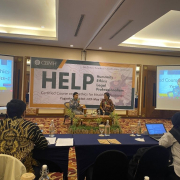
In response to the urgency of these issues, the Center for Bioethics and Medical Humanities (CBMH), Faculty of Medicine, Public Health, and Nursing, Universitas Gadjah Mada (FK-KMK UGM), held its weekly RABOAN academic forum on Wednesday, 10 September 2025. This regular forum serves as an interdisciplinary platform for discussing contemporary issues in bioethics.
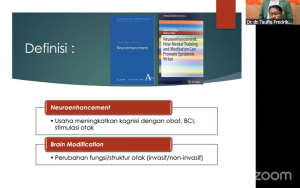
The theme of this session was “Neuroenhancement and Brain Modification: Ethical Aspects in the Use of Cognitive Enhancement Technologies.” The main speaker, Dr. dr. Taufiq Fredrik Pasiak, M.Kes., M.Pd.I., MH., CIPA, delivered a comprehensive presentation on the development of neuroscience technologies and their accompanying ethical implications. The discussion was moderated by Mahmasoni Masdar, S.Kep., Ns., M.Kep.
During the session, Dr. Taufiq explained that neuroenhancement refers to the use of technology to improve human cognitive brain functions beyond their normal state. Current examples include non-invasive brain stimulation, concentration-enhancing pharmaceuticals, and the potential for brain modification through advanced technological interventions.
According to him, these technological developments offer significant opportunities in education, healthcare, and workplace productivity. For instance, cognitive enhancement technologies may assist patients with neurodegenerative disorders such as Alzheimer’s disease, or support individuals with learning difficulties in adapting more effectively.
Nevertheless, he emphasized that such innovations are inseparable from serious ethical concerns, including:
-
Justice and accessibility — whether these technologies will be accessible only to financially privileged groups, thereby widening existing inequalities.
-
Long-term safety — the lack of extensive research on long-term effects raises concerns about potential new health risks.
-
Privacy and individual freedom — technologies capable of influencing brain function provoke fundamental questions regarding the protection of human rights.
-
The need for regulation — the importance of developing policy frameworks involving multidisciplinary perspectives, from medicine to law, to ensure ethical governance of these technologies.
Dr. Taufiq also highlighted the concept of neurorights, referring to fundamental rights that must be safeguarded in the era of neuroscience innovation. These include the right to personal identity, freedom of thought, mental privacy, and protection against discrimination based on cognitive capacity.
This issue is closely linked to the achievement of the Sustainable Development Goals (SDGs), particularly SDG 3: Good Health and Well-Being. Cognitive enhancement technologies hold potential to support brain health and improve quality of life, especially in the prevention and treatment of neurological and mental disorders. Neuroenhancement may also contribute to the rehabilitation of patients with impaired brain function, enabling them to return to productive daily activities. However, without appropriate regulation, such technologies risk generating new health problems, including dependency, misuse, or unknown long-term effects.
By addressing the topic of neuroenhancement, CBMH UGM demonstrates its commitment to ethical reflection amid rapid technological innovation. It is hoped that this discussion will serve as a starting point for further research, policy development, and regulatory frameworks that can balance technological benefits with the protection of fundamental human values.
Reporter: Ardhini N, M.K.M.
Editor: Rafi


Leave a Reply
Want to join the discussion?Feel free to contribute!