Tag Archive for: SDGs 16

Learning History: A Crucial Foundation for an Ethical and Sustainable Future
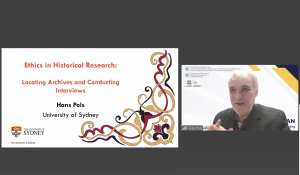
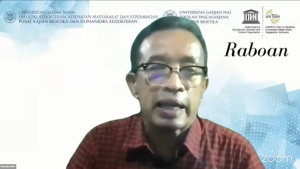
Yogyakarta, 16 July 2025 – In a rapidly changing world, studying history is not just about remembering the past, but also about understanding the direction of our future. History offers us essential lessons—particularly in ethics, justice, and humanity. The principle of “Jas Merah” (an Indonesian acronym for “Never Forget History”) is especially relevant to this edition of Raboan Research and Perspective Sharing, which raised the theme “Ethical Considerations in Historical Research: Locating Archives and Conducting Interviews.” This session featured Professor Hans Pols from the University of Sydney and was moderated by Ns. Wahyu Dewi Sulistyarini, M.S.N., from CBMH UGM.

Prof. Hans emphasized that history is no longer solely told from the perspective of those in power or from elite narratives. Today, it also serves as a space to amplify voices that have long been marginalized—such as those of women, laborers, and ethnic minorities—offering us a broader and more just understanding of the past.

He also highlighted the vital role of archives as key sources of information about past events and figures. However, working with archives also presents ethical challenges. For example, colonial-era Dutch newspapers archived on Delpher.nl contain rich data but are written in Dutch and largely reflect a colonial viewpoint. This makes it all the more important to balance such sources with materials that represent diverse Indonesian perspectives, including oral histories that are more inclusive and sensitive to cultural and social diversity.

According to Prof. Hans, ethics in historical writing means having the courage to explore stories that are unusual, overlooked, or hidden within the “silences” of history. It also means ensuring that history—through books, journals, and digital databases—can be accessed by everyone, regardless of background or academic privilege.

This topic closely aligns with several Sustainable Development Goals (SDGs), particularly SDG 4: Quality Education, by promoting a critical and inclusive understanding of the past, SDG 10: Reduced Inequalities, by highlighting stories from marginalized communities, SDG 16: Peace, Justice, and Strong Institutions, by uncovering the roots of injustice and fostering transparent, equitable governance.

By learning from the successes and failures of the past—whether in managing resources, fostering social development, or upholding justice—we can craft wiser, more ethical, and more inclusive pathways for the future. A future that values not only progress but also fairness, diversity, and shared humanity.

Reporter: Ika Setyasari, S.Kep.Ns., M.N.Sc

Editor: Alvira Rahmasari, S.H.G.

[easy_youtube_gallery id=RdRt8uXzkK8 cols=1 ar=16_9 thumbnail=0 title=top]”Ethical Considerations in Historical Research: Locating Archives and Conducting Interviews”[/easy_youtube_gallery]
Who Decides What Happens to Your Body? Raboan Talks About Family Roles in Medical Decisions During the Pandemic

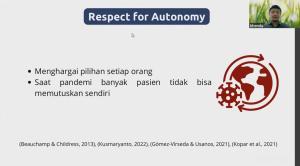
Yogyakarta, June 4, 2025 – The weekly Raboan Research and Perspective Sharing returned on Wednesday with a meaningful discussion on real-life issues during the pandemic. Nathan Agwin Khenda, Ftr., M. Bio.Et., was the speaker, sharing insights on the topic: “Healthcare Workers’ Views on Family Involvement in Medical Decisions During the COVID-19 Pandemic.”

Khenda explained that during the pandemic, many patients couldn’t make decisions about their medical treatment. Some were too sick, didn’t understand their condition, or needed urgent care. So, decisions were often made by family members, community leaders, or even doctors directly.

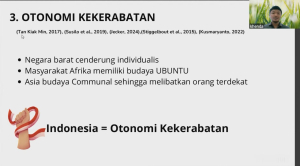
This shows how strong family and community culture is in Indonesia. Important decisions, especially in health, are often made together, not just by the patient alone. This is called “familial autonomy”, where families play a big part in choosing what happens in medical treatment.

Based on stories from two hospitals, Khenda shared how things like family relationships, cultural values, and emergency situations affect these decisions. In normal conditions, doctors will try to explain everything first to both patients and families. But in emergencies, they have to act fast to save lives.

“In crisis moments, doctors focus on doing what’s best for the patient (beneficence) and choosing actions with the least risk (minus mallum),” Khenda said.

This topic also connects to the Sustainable Development Goals (SDGs), especially Goal 3 (Good Health and Well-being) and Goal 16 (Justice and Strong Institutions). A good healthcare system should not only have good equipment or doctors, it should also respect people’s rights and cultural values.

This Raboan session left us with a big question to think about: in serious situations, who really makes the final call about our body—us, our family, or someone else?

Reporter          : Ardhini Nugrahaeni, M.K.M.

Editor              : Alvira Rahmasari, S.H.G.


[easy_youtube_gallery id=2PoxzM5xMQg cols=1 ar=16_9 thumbnail=0 title=top]Otonomi Kekerabatan dalam Pengambilan Keputusan Tindakan Medis saat Pandemi COVID-19[/easy_youtube_gallery]

Without Calibration, Medical Devices Can Become a Threat, Not a Solution

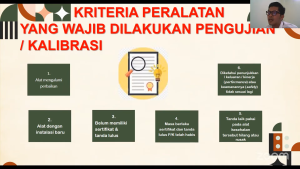
(A presentation on medical device calibration by Anggie Maulana Subkhan, SKM, M.Bio.Et.)

(A presentation on medical device calibration by Anggie Maulana Subkhan, SKM, M.Bio.Et.)

Yogyakarta, January 15, 2025 – Raboan Research and Perspective Sharing returned with an engaging topic titled “Ethical Issues in Medical Device Calibration Services”. This event was attended by healthcare professionals, practitioners, and students interested in bioethics and medical device calibration.

The webinar featured Anggie Maulana Subkhan, SKM, M.Bio.Et, as the keynote speaker. Anggie, a calibration technician at the Yogyakarta Health Office and an alumnus of the Master of Bioethics program, brought valuable insights into the ethical challenges faced in the medical sector. He emphasized that medical device calibration is not just crucial for accreditation but also essential for patient safety, ensuring accurate measurement results.

Anggie also discussed ethical dilemmas in the calibration process, including the lack of trained personnel, unaccredited calibration institutions, and budget constraints often faced by healthcare facilities. With existing regulations, such as the Ministry of Health Regulation No. 54 of 2015 on medical device testing and calibration, it is vital for all stakeholders to understand the critical role of calibration in preventing serious health risks caused by device errors.

This discussion strongly aligns with the Sustainable Development Goals (SDGs), particularly SDG 3: Good Health and Well-being. Accurate and ethical medical device calibration ensures precise diagnoses, reduces medical errors, and enhances patient safety. Additionally, the webinar supports SDG 16: Peace, Justice, and Strong Institutions, by highlighting the importance of fair regulations, institutional capacity building, and ethical accountability in healthcare services. The collaboration among institutions discussed during this session reflects collective efforts to sustain a global health system.

The Raboan session provided profound insights into the importance of ethics in medical device calibration and its contribution to the quality of healthcare services. The event also emphasized the need for collaboration between healthcare institutions, calibration agencies, and the community to ensure calibration processes are conducted effectively and in compliance with standards.

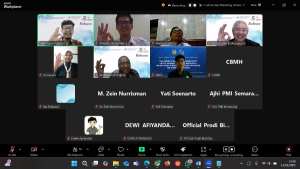
(Group photo session with Raboan participants)

For more information, visit our Instagram pages @cbmh_ugm and @bioetika.ugm or contact us via email at cbmhfkugm@mail.ugm.ac.id.

Reporter          : Alvira Rahmasari, S.H.G.

Editor              : Rafi Khairuna Wibisono, S.Kom.

Webinar RABOAN “Ethics and Moral Dilemma: Approaches For Solving Ethical Dilemmas”

[easy_youtube_gallery id=ZF6448yO1BM cols=1 ar=16_9 thumbnail=0 title=top]RABOAN “Ethics and Moral Dilemma: Approaches For Solving Ethical Dilemmas”[/easy_youtube_gallery]

Yogyakarta, October 2, 2024 – The Center for Bioethics and Medical Humanities (CBMH) of the Faculty of Medicine, Public Health, and Nursing, Universitas Gadjah Mada (FKKMK UGM) hosted the RABOAN webinar titled “Ethics and Moral Dilemma: Approaches For Solving Ethical Dilemmas”. The event featured Dr. Johanes Haryatmoko, SJ., a social ethics expert, as the keynote speaker, with Prof. Syafaatun Almirzanah, M.A., M.Th., Ph.D., D.Min. serving as the moderator.

This webinar explored ethical approaches to addressing moral dilemmas, particularly in the healthcare field, using principles such as deontology, utilitarianism, proportionalism, and communitarianism. The discussion emphasized the importance of deep reflection in making ethical and fair decisions, aligning with the Sustainable Development Goals (SDGs) 3 on Good Health and Well-Being, and SDG 16 on Peace, Justice, and Strong Institutions.


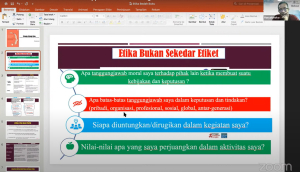
Dr. Haryatmoko highlighted that “what is legal is not necessarily moral.” Ethical decisions, especially in the medical field, cannot be based solely on formal law but must also involve a deep analysis of social and cultural contexts. One example discussed was the case of a mother who refused an abortion despite significant pressure from her family. Dr. Haryatmoko emphasized the importance of respecting individual autonomy while considering collective values.

Prof. Syafaatun added that often, moral dilemmas arise from a lack of effective communication. “Before an issue becomes an ethical dilemma, the main problem is often poor communication,” she stated. She stressed the need for open and inclusive dialogue between healthcare providers and patients, which is in line with the SDGs’ efforts to promote peace and justice through effective communication.

The discussion also touched on ethical dilemmas in medical practice in Indonesia, such as preeclampsia procedures, abortion, and vasectomy, which often conflict with religious values. The webinar stressed the importance of adopting locally grounded ethical approaches to formulating humane solutions, in line with global efforts to ensure equitable and dignified healthcare access.

In conclusion, Dr. Haryatmoko reminded the participants that open discourse and deep reflection are key to navigating moral dilemmas. “Social ethics requires a bridge in the form of values and competencies to connect vision with action,” he stated.

The webinar was attended by participants from various sectors, including healthcare professionals, academics, and students, who actively asked questions regarding ethical dilemmas in medical practice. Dr. Haryatmoko’s book, which delves further into social ethics, also garnered significant attention from attendees.


For more information, please visit the official of CBMH UGM

E-mail             : cbmhfkugm@ugm.ac.id

Youtube          : CBMH UGM

Instagram        : cbmh_ugm


Reporter          : Rafi Khairuna Wibisono, S.Kom.

Editor              : Alvira Rahmasari, S.H.G.